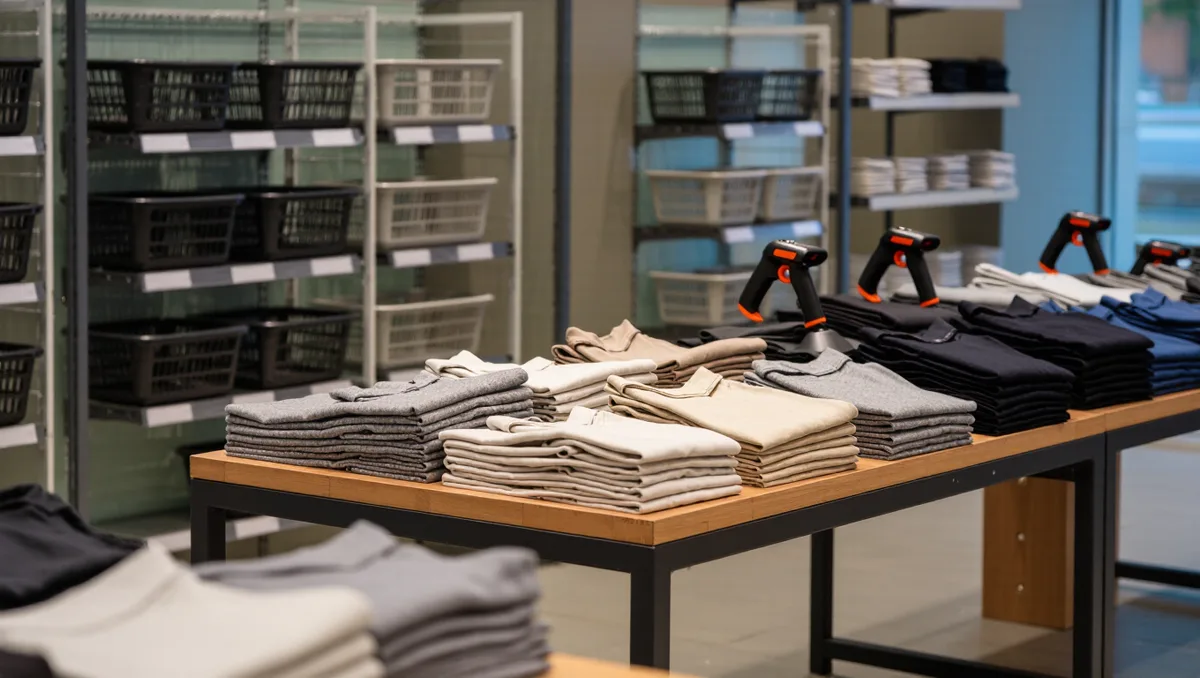
A career in retail rarely starts at the buying desk. It starts on the floor, folding denim and learning how a store actually moves product. The good news is that the path from there into buying, merchandising, or store leadership still exists. The qualification is that it no longer runs on seniority alone; it runs on proof that a person understands the numbers behind the rack.
The floor job teaches three things no classroom does: how customers behave in the last ten feet of a decision, how a stockroom behaves at 7 a.m., and how a planogram — the diagram that dictates which shelf holds which product — turns strategy into shelf space. Those three lessons are the raw material of every role above them. This connects to our earlier piece, How Planogram Software Decides What Goes on Which Shelf, and When.
This guide profiles the main paths: the floor as training ground, the move into buying and merchandising, the climb into store leadership, and the practical steps that make the jump. It is written for people choosing a first job and for floor staff deciding what to aim at next.
What does the sales floor actually teach?
The floor is the only place in a retail company where every system the business runs becomes visible at once. A shift touches markdowns, returns, replenishment, and customer data, all before lunch. Someone who watches those systems closely learns the difference between what the plan says and what the customer does.
That observation is the real entry credential. Buyers and merchandisers who came up through stores talk about fit and sell-through differently from people who have only seen the data. A floor associate who can explain why a style stalled in one location and flew in another is already doing entry-level analysis.
The floor also teaches the operational basics that surprise people later: how shift coverage is built around predicted traffic, and how a single pickup order can cost more than it earns. Two of the jobs a modern associate does — processing online orders and handling returns — did not exist in the same form a decade ago. Anyone building a career needs to understand both.
How do people move from the floor into buying and merchandising?
Buying and merchandising sit at the center of the business. A buyer decides what a store stocks. A merchandiser decides how much, where, and when, and how the assortment is presented. The two roles overlap, but merchandising is the more analytical of the pair and often the wider door.
The classic route is internal. A strong associate moves into a stock or inventory coordinator role, then into an assistant buyer or allocation analyst position. The skills that matter are arithmetic and judgment: open-to-buy, which is the budget left for future purchases; sell-through, which is how fast stock leaves the floor; and the markdown calendar that governs when prices fall. Readers who want the mechanics can see who decides price cuts and on what calendar and how inventory turn benchmarks deserve scrutiny before anyone trusts them.
The external route runs through head-office analyst jobs, often filled by graduates in business, statistics, or supply-chain fields. The trade-off is straightforward. Internal movers bring store credibility but may need to build spreadsheet depth. External hires bring analytical training but must learn the floor they will never work. The strongest candidates close the other half of their gap deliberately.
What does store leadership demand?
Store leadership is the other ladder, and it is the one most visible from the floor. A department lead supervises a section. An assistant manager owns scheduling and operations. A store manager owns the profit-and-loss of the whole building, from payroll to shrink — the inventory that disappears through theft, damage, or error.
The skill set is people first, numbers a close second. A store manager hires, trains, schedules, and motivates, then explains the result through conversion, average transaction value, and labor hours. The U.S. Bureau of Labor Statistics' Occupational Outlook Handbook describes sales managers as the people who plan, direct, and coordinate the delivery of a product or service to the customer, and training and development managers as those who design programs to teach staff new skills — a fair one-line summary of the two halves of the job.
What has changed is scope. Modern store managers also run pickup operations and returns processing, both of which pull labor away from selling. Understanding the real cost of order pickup and what one returned garment costs to process is now part of the leadership toolkit, not a head-office specialty.
Which support roles are worth aiming at?
Between the floor and the buying desk sits a band of specialist jobs that many career plans skip. Visual merchandising turns layout theory into fixtures and sightlines. Planning and allocation decides which stores get which quantities. Operations roles own the stockroom, the delivery schedule, and increasingly the technology that ties channels together.
These roles reward the same store-honed instincts. A visual merchandiser who has worked the floor knows that the first metres of a store sell almost nothing, and why. An allocator who has faced a Saturday rush knows why a full stockroom can still mean empty shelves in the right size. The cross-channel work — counting one dress across web, app, and rack — has turned inventory accuracy into a career in its own right, and cross-channel inventory explains how deep that goes. Readers following this should also see Cross-Channel Inventory: How a Store Counts One Dress Across Web, App, and Rack.
Pay and progression in these roles vary widely by company and market, and no single figure describes them. What holds across companies is that they are salaried, office-based, and measured on the same metrics the floor generates. That is the connection to protect.
What this means: practical steps for building the career
Our analysis of how these paths work points to a short list of moves that matter more than talent alone.
- Learn the store's numbers. Ask for the weekly report. Conversion, units per transaction, and markdown percentage are the vocabulary of every interview above the floor.
- Volunteer for the unglamorous systems. Receiving, cycle counts, and pickup orders teach the operational layer that head-office roles assume everyone knows.
- Find the internal posting board early. Most buying and planning careers start with a transfer, not an external application. Timing the move before a role is advertised is half the game.
- Build spreadsheet fluency deliberately. Pivot tables and basic forecasting are the literacy test of merchandising. Free courses cover them; the store provides the data to practice on.
- Choose a first retailer for its systems, not its logo. A company with strong training and clean data teaches faster than a fashionable one with none.
One caution belongs here. Titles are not standardized across the industry. An "assistant manager" at one chain runs a department; at another, the same title means closing keys and nothing more. Compare the duties, not the name on the badge.
Where retail careers are heading
The evidence points to a floor that is becoming more technical, not less. Order pickup, returns processing, and fit-prediction tools have added analytical work to jobs that used to be purely service. The people who advance will be the ones who treat that as an opportunity: the associate who can explain why the return rate moved is more valuable than the one who only processes the return.
The ladder also forks earlier than it used to. A person can now reach planning or operations without ever holding buying responsibility, and reach store leadership without ever visiting a head office. Neither fork is better. What matters is choosing one deliberately and collecting the proof — the numbers, the systems, the trained judgment — that the next rung requires.
What remains unknown is how far automation will push the entry rungs upward. Self-checkout and scheduling software already absorb some tasks that once trained new staff. If that continues, the first job in retail may carry more responsibility sooner, and less time to learn it informally. Anyone entering now should assume the learning has to be intentional from day one.