Heron Preston and Formula E have started a long-term creative partnership that pairs the designer's reclaimed-materials practice with the all-electric motorsport championship, according to WWD via Yahoo. The first public output is a preview capsule of T-shirts, long-sleeves and hoodies made from fabrics from his eX-Ray concept, shown alongside a GEN4 Formula E car carrying an exclusive exterior design. Pricing, production scale and distribution are still being explored.
For anyone who designs or buys clothing, the useful part is not the car. It is the method on display: a small capsule built from pre-consumer factory offcuts and production scraps, plus deadstock fabric from past collections, used as a test before any larger commitment. That sequencing — prove the material in a limited run, then scale — is the practical takeaway from this design story. This connects to our earlier piece, How Fabric Grain Direction Shapes the Way a Garment Hangs and Stretches.
The debut lands at ComplexCon Los Angeles on Saturday and Sunday, so the timeline is short and the scope is deliberately narrow. Here is how the pieces fit together, and what each step signals.
What is eX-Ray, and why does it matter here?
eX-Ray is Preston's own concept for what he calls the brand's most advanced L.E.D. — less environmentally destructive — products. In his statement to WWD, he described examining "every layer of a garment with X-ray vision, from what it's made of to who makes it." The "eX" stands for example: the benchmark the rest of the brand works toward.
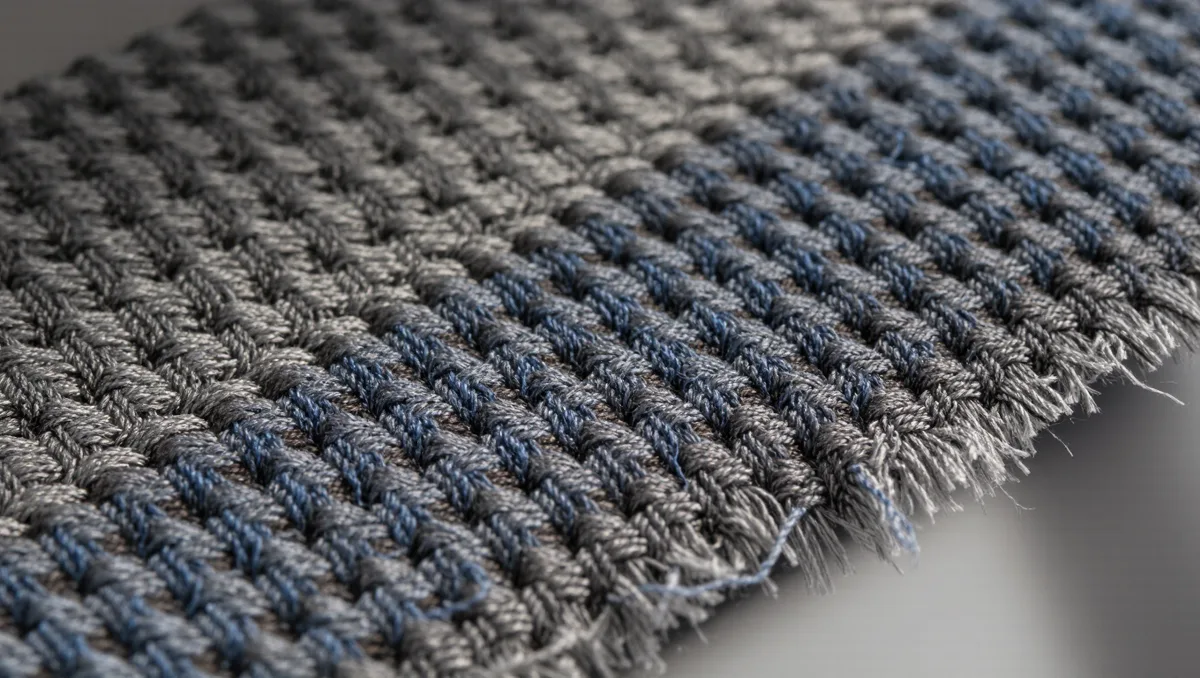
That definition matters because it is the designer's own claim, not an independent certification. The house rule for reading any sustainability statement applies: note whose claim it is. What the reporting supports is narrower and concrete — the preview capsule uses eX-Ray recycled cotton made from pre-consumer factory offcuts and production scraps, along with deadstock fabric from past collections. Recycled cotton of this kind is a real material category; how mills handle fiber recovery is the same engineering territory covered in how lyocell fibers are made and why the solvent recovery rate matters, where inputs and process losses decide the outcome. Readers following this should also see How Lyocell Fibers Are Made, and Why the Solvent Recovery Rate Matters.
What can a designer actually copy from this rollout?
The partnership is still forming, but the preview itself models a sequence that translates to any studio or small label. Based on what the reporting establishes, the steps look like this:
- Start with material that already exists. The capsule's fabrics come from pre-consumer factory offcuts, production scraps and deadstock from past collections — inputs that require no new fiber production.
- Define the standard internally before announcing it. eX-Ray is Preston's benchmark concept, with the "eX" standing for example. The standard is named first; the products follow it.
- Test in a limited capsule. T-shirts, long-sleeves and hoodies are simple blocks — the kind of construction where fabric behavior, from grain direction to how a hem rolls, shows up quickly and cheaply.
- Leave the commercial questions open. Pricing, production scale and distribution are explicitly still being explored. The preview exists to test the material story, not to commit the brand to a volume it cannot back.
That last point is the one most often skipped. A capsule that settles pricing before it settles material supply locks itself into whatever the first run proved.
Why put a race car in the same room as the clothes?
The GEN4 car in the preview carries Preston's signature orange with chrome and matte details, plus text-based graphics calling out "Zero Rare Earth Minerals" and "600kW Max Power." The pairing is deliberate. "Formula E is re-engineering what a race car can be. eX-Ray does the same for clothing," Preston said in his statement to WWD.
For a designer, the graphic treatment is the transferable part: the car states its engineering facts on its surface. Applying the same habit to garments — saying plainly what a piece is made of and who made it — is what the eX-Ray definition already asks for.
What comes next, and what is not settled?
The longer-term vision, per Preston, is to explore materials recovered from the sport itself — carbon fiber, metals and other components from the cars. He was explicit that this has not started: "We haven't started that yet, but the opportunity is to understand what those materials could become through design." The partnership could also expand into fan merchandise, accessories and new uses for racing materials, though "the wider product roadmap is still taking shape."
Read both statements as scope, not promise. Nothing in the reporting establishes that racing materials will appear in garments, on what timeline, or at what price. What is established is a preview capsule with a named material source, a public debut date, and a designer who has tied the work to a decade of upcycling practice. "Build things honestly. Real materials, real function, no pretending," Preston said, describing the rebuild of his own brand a few years ago.
The next verifiable checkpoint is the capsule itself at ComplexCon Los Angeles. Everything after it — scale, pricing, distribution, recovered racing materials — remains, as of this writing, unannounced.