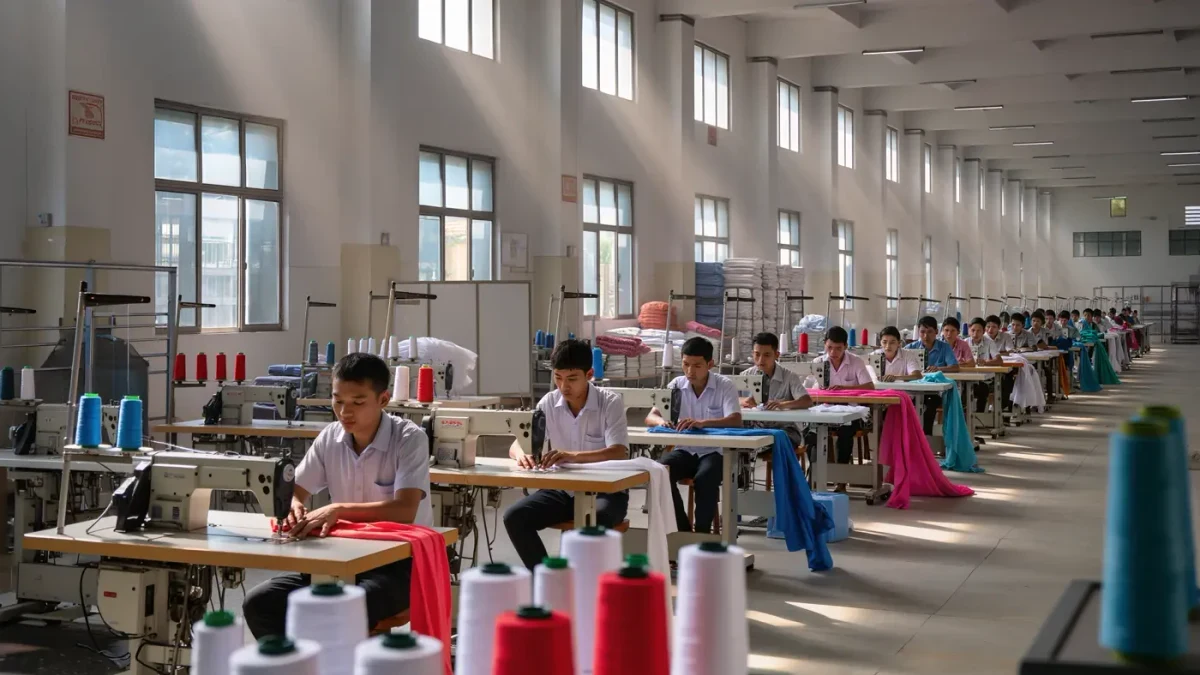
Cambodia's minimum wage for the garment, footwear and travel-goods sector rose to $210 per month for regular workers in 2026, up $2 from $208, per the Ministry of Labour's announcement made in late 2025 and effective January. With mandatory allowances included, per trade coverage of the decision, total monthly earnings reach $227 to $238. Labor unions had demanded at least $232 in base pay. The two-dollar increase is the smallest in years, and it lands in a sourcing market where wage arithmetic is quietly rebalancing which countries make whose clothes.
Why does a two-dollar increase matter?
Because the argument was about direction, not magnitude. Cambodia's wage-setting body negotiates annually, and per Sourcing Journal's coverage of the talks, unions framed the $232 demand as a recovery of purchasing power lost to inflation since the last rounds. The $210 settlement keeps the annual ritual intact while conceding almost nothing to that argument. For brands sourcing basics from Cambodian factories, the signal is stability at a low level; for the workers cutting and sewing that basics program, the signal is that the annual review no longer functions as a meaningful adjustment mechanism. Both readings travel: the first into sourcing plans, the second into turnover and unrest statistics.
How does Cambodia's wage compare across the region?
Toward the low end and holding. Per published sector data, Bangladesh's garment minimum stands at BDT 12,500 — roughly $113 monthly — set in late 2023 after a 56.25 percent increase, with only incremental annual adjustments since and the next full review years away. China's coastal garment wages run several times both. The spread explains the geography of basics production: the lowest-wage markets hold the highest-volume programs, and each percentage point of wage growth in any of them re-prices a global assortment. Cambodia's near-flat 2026 adjustment, read against Bangladesh's flat base, means the low end of the map stayed frozen through this year's negotiations.
What happens when wages lag living-cost estimates?
The gap migrates into brand risk. Advocacy groups put living-wage estimates for Bangladeshi garment workers around BDT 23,000 monthly — roughly double the legal minimum — and per Cornell researcher calls covered in the Dhaka Tribune, the five-year review cycle itself is the problem, with annual adjustments recommended instead. Per the Fair Labor Association's own wage-trend analysis for Bangladesh, average net wage growth over recent years has been minimal. Brands answer this gap with their own programs — top-ups, benefits schemes — but per the structure of the market, no voluntary program substitutes for the statutory floor, and the gap between the two is where supply-chain labor disputes now predictably ignite.
What should a sourcing watcher take from the 2026 round?
That wage convergence is not coming on its own. Cambodia's two-dollar increase, Bangladesh's flat base and continuing weak cotton and freight economics all point the same direction through early 2026: the labor-cost floor of the garment trade is being held down by the price pressure from above. Per the arithmetic that sourcing analysts publish, labor is 15 to 25 percent of a garment's cost — small enough that doubling wages would raise retail prices far less than consumers assume, and concentrated enough that factories cannot do it alone. The floor moves when buyers commit to paying for the move, which is why the annual Cambodia figure is worth reading even when, as this year, it barely moves at all.
For more context, read The $2 Wage Rise Against the $9.99 Price Floor: Summer 2026 in One Number.
For more context, read us apparel imports april 2026.
For more context, read cotton futures 2026.