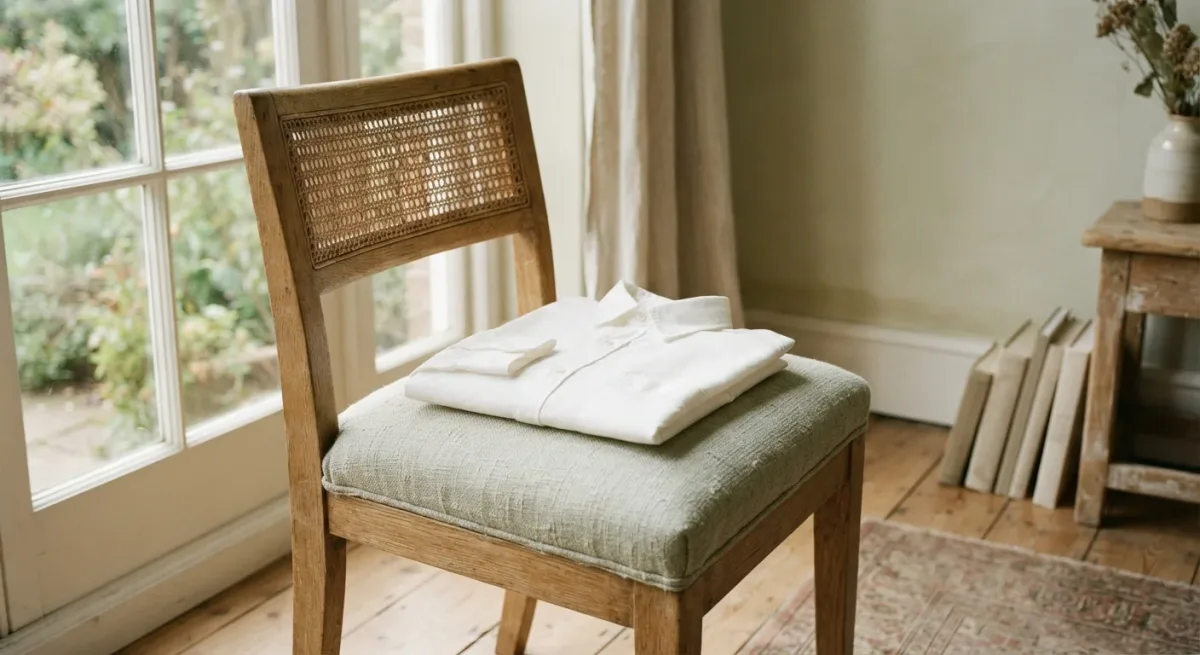
A good white shirt costs between roughly $90 and $150 in decent cotton poplin, and from $300 to $600-plus at the high end from makers like Charvet or Turnbull & Asser — and the difference is checkable: fabric origin, seam construction, and where it was made, per the brands' own product specifications. Below $60 you are usually paying for a blend or a lighter weave that will show it within a season. Prices here are sourced from brand sites and listed as of 2024, subject to change. This is a buying guide, not a push — the goal is knowing what the money buys.
The white shirt is the most-audited garment in a wardrobe: worn weekly, washed constantly, seen at close range. It is the piece where construction shortcuts show first, which makes it the best place to learn to read quality.
What does the fabric tier actually change?
Three things: opacity, wrinkle behavior, and lifespan. Cotton poplin — the classic shirting weave, plain-woven and smooth — is the standard at mid prices; two-ply yarns (two threads twisted together, labeled 2-ply or 2x2) are denser and more opaque than single-ply at the same weight. At the top end, long-staple cottons — Egyptian and the Giza varieties, or Sea Island cotton — produce smoother, stronger yarns because the fibers are longer, per the textile industry's own grading standards. A practical check you can do anywhere: hold the fabric to light. A quality white poplin shows a fine, even weave with no visible patchiness; a cheap one shows it.
What construction details mark the good ones?
Five, in rough order of visibility. French seams — the raw edge enclosed in a second seam — instead of overlocked edges; they take longer to sew and are the signature of shirtmakers at every price above $200. Pattern matching at the stripes or checks, irrelevant on solid white but a tell on any companion shirt from the same maker. A split yoke (the shoulder panel cut in two diagonally pieces) for a bit of give. Buttons of mother-of-pearl rather than plastic, which you can identify by the cool, iridescent feel. And a collar with removable stays or a built-in interlining that keeps its shape through washing, per the construction details brands like Emma Willis and Ascot Change document on their own product pages.
What do the price tiers look like side by side?
| Tier | Price range | Typical fabric | Typical construction |
|---|---|---|---|
| Everyday | $90–150 | 2-ply cotton poplin | Overlocked seams, plastic or MOP buttons |
| Mid | $150–300 | 2-ply 100s–120s cotton | French seams begin, MOP buttons |
| High | $300–600+ | Long-staple Swiss or Egyptian cotton | French seams, split yoke, hand-finished details |
Price bands are indicative, drawn from listed brand pricing as of 2024 — Everlane and Uniqlo at the accessible end, makers like Charvet at the top — and prices change; treat the table as a map, not a quote.
Where is the sweet spot for most closets?
The $120 to $200 band, and here is the reasoning. A white shirt's lifespan is measured in washes, and the mid tier's 2-ply poplin survives machine washing at that home-care level the top tier's finer fabrics handle less happily — very high yarn counts (the 170s and 200s) are famously delicate and better suited to the wash-care a dry cleaner provides. You'll wear the shirt more than the dress — buy accordingly. One well-chosen mid-tier shirt in a cut that fits your shoulders beats two cheap ones that don't, and alterations on a shirt's body are a $15 to $30 line item at most tailors that fixes the one fit variable that matters most.
How do you make whichever tier you buy last?
Wash cool, hang immediately, and skip the dryer — heat is what kills collar interlinings and shrinks seams, per the care guidance that every serious maker prints on its labels. Rotate between at least two shirts rather than wearing one into the ground; cotton fibers recover between wears. And treat underarm yellowing early: an oxygen-based soak — the same chemistry the brands' care pages recommend — handles it before it sets. The best shirt at any price is the one still looking right in year three.